- You have no items in your shopping cart
- Subtotal: ৳ 0.00
 meh.riztech
Posted on
meh.riztech
Posted on
Industries today are under constant pressure to improve efficiency, reduce energy consumption, and maintain consistent production quality. Whether it’s drying coatings, curing materials, or heating specific surfaces, traditional heating methods often fall short due to slow response times and uneven heat distribution. That’s where modern infrared solutions step in—and one of the most effective among them is the twin tube quartz heating system.
Unlike conventional heaters, twin tube quartz technology offers rapid heating, precise control, and improved durability. These qualities make it highly valuable in manufacturing environments where time and consistency directly impact output and cost. Understanding how this technology works and how to apply it effectively can help businesses make smarter operational decisions.
In this article, we’ll break down the concept, explore real-world applications, and provide actionable guidance for using twin tube quartz systems efficiently.
What Is Twin Tube Quartz Heating?
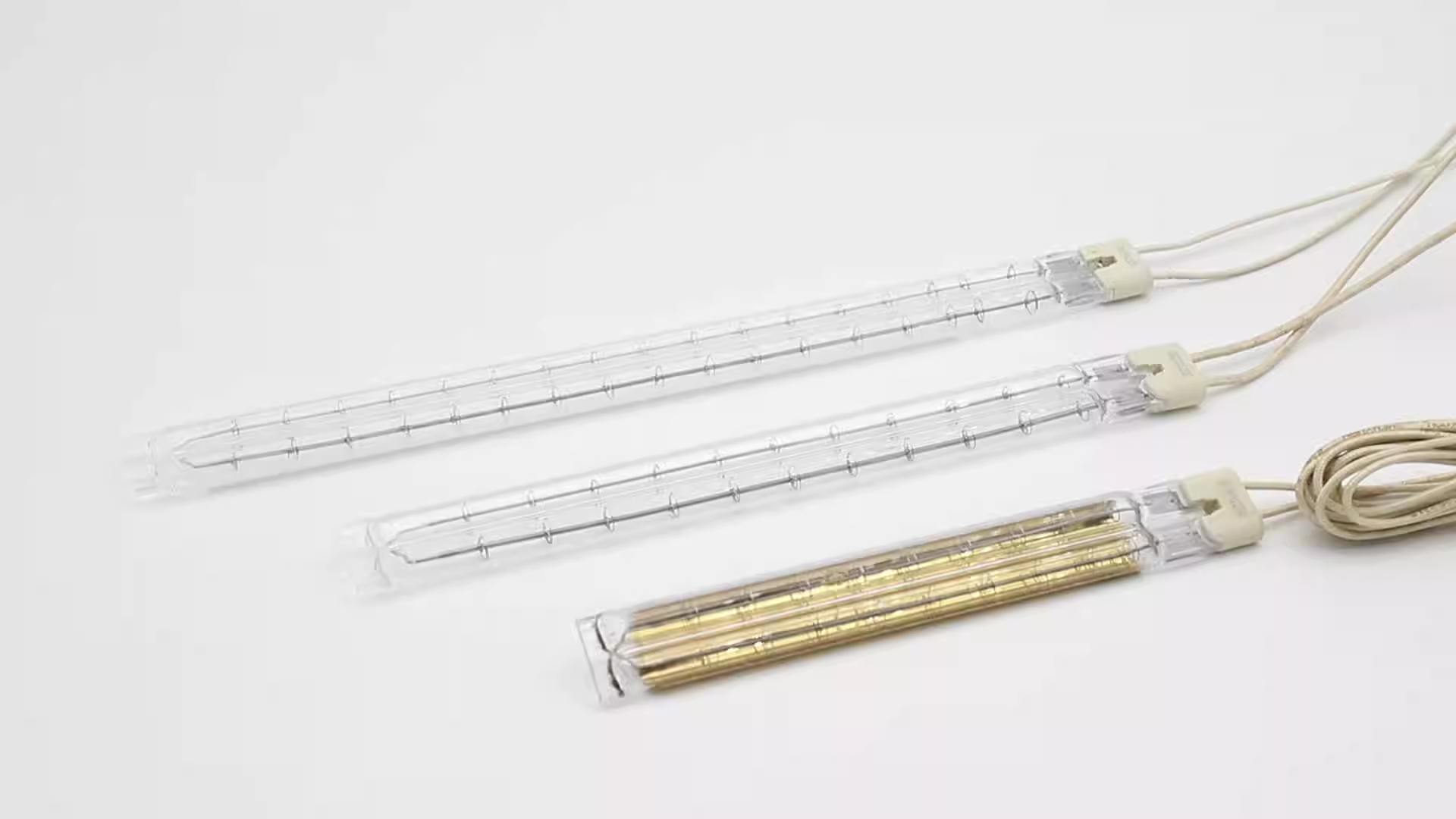
Twin tube quartz heaters are a type of infrared heating system designed with two parallel quartz tubes enclosing a heating element. These tubes are typically made from high-purity quartz, which allows efficient transmission of infrared radiation while protecting the internal filament.
The design improves both durability and heat output. The twin-tube structure distributes heat more evenly compared to single-tube systems, making it ideal for applications requiring uniform surface heating.
How It Works
When electricity passes through the internal filament, it generates heat. This heat is transferred through the quartz tubes as infrared radiation. Unlike convection heating, which warms the air first, infrared heating directly heats objects and surfaces. This results in faster response times and reduced energy waste.
Key Benefits
- Rapid heat-up time (often within seconds)
- Even heat distribution across surfaces
- Energy-efficient operation
- Long operational lifespan
- Resistance to thermal shock
These benefits explain why twin tube quartz systems are widely used across industries like automotive, textiles, food processing, and electronics manufacturing.
Applications Across Industries
Twin tube quartz heaters are versatile and adaptable. Their ability to deliver targeted heat makes them suitable for a wide range of applications.
Industrial Drying
In paint and coating lines, consistent drying is critical. Twin tube quartz heaters ensure uniform curing without overheating sensitive materials.
Plastic Forming
Thermoforming processes require controlled heating of plastic sheets. The even radiation provided by twin tube quartz prevents warping and improves product quality.
Food Processing
Infrared heating is used for baking, roasting, and drying food products. The quick response time helps maintain consistent cooking conditions.
Printing and Packaging
Ink drying is a crucial step in printing. Twin tube quartz systems provide the precise heat needed for quick drying without damaging the substrate.
Step-by-Step Guide to Using Twin Tube Quartz Effectively
Implementing twin tube quartz heating isn’t just about installation—it requires proper planning and execution. Here’s a practical approach based on real-world usage.
Step 1: Define Your Heating Objective
Start by identifying what you need to heat and why. Are you curing coatings, drying materials, or maintaining temperature? Each application requires a different setup.
For example, curing paint on metal parts requires higher intensity and shorter exposure time compared to drying textiles.
Step 2: Select the Right Power Rating
Choose a heater with appropriate watt density. Too much power can damage materials, while too little will reduce efficiency.
A general rule:
- High-density applications: metal processing, coatings
- Low-density applications: textiles, food
Step 3: Optimize Placement
Position the heater at the correct distance from the target surface. Too close may cause hotspots, while too far reduces effectiveness.
A typical setup involves:
- Adjustable mounting brackets
- Reflectors to direct heat efficiently
Step 4: Use Reflectors for Efficiency
Reflectors play a crucial role in maximizing infrared output. They help direct heat toward the target instead of losing it to the surroundings.
Polished aluminum reflectors are commonly used for this purpose.
Step 5: Implement Temperature Control
Use sensors and controllers to maintain consistent heating. Infrared systems respond quickly, so precise control prevents overheating.
PID controllers are often used in industrial setups for accurate temperature management.
Step 6: Test and Adjust
Run initial tests and monitor performance. Adjust positioning, power settings, and exposure time based on results.
This step ensures optimal performance before full-scale operation.
Common Mistakes and Challenges
Even though twin tube quartz systems are efficient, improper use can lead to performance issues. Here are some common pitfalls to avoid.
Incorrect Distance from Target
Placing the heater too far reduces heat intensity, while placing it too close can cause uneven heating or damage.
Ignoring Reflector Quality
Low-quality or poorly maintained reflectors reduce efficiency significantly. Dirt and oxidation can block infrared radiation.
Overlooking Maintenance
Quartz tubes are durable but not indestructible. Accumulated dust or contaminants can affect performance over time.
Using Wrong Power Settings
Excessive power can lead to material degradation, while insufficient power results in incomplete processing.
Lack of Proper Ventilation
Although infrared heating doesn’t rely on air, surrounding equipment may still require proper ventilation to prevent overheating.
Practical Tips and Expert Recommendations
Based on industry experience, here are some practical tips to get the most out of twin tube quartz systems.
Focus on Uniform Heating
Ensure even coverage by aligning multiple heaters properly. Overlapping heat zones can help eliminate cold spots.
Regular Cleaning
Keep quartz tubes and reflectors clean. Even a thin layer of dust can reduce efficiency.
Use Modular Systems
Opt for modular setups that allow easy replacement and adjustment. This reduces downtime during maintenance.
Monitor Energy Consumption
Track energy usage to identify inefficiencies. Twin tube quartz systems are energy-efficient, but improper setup can increase costs.
Match Heater to Material
Different materials absorb infrared radiation differently. Metals, plastics, and textiles require tailored heating approaches.
Invest in Quality Components
High-quality quartz tubes and reflectors last longer and perform better. Cutting costs here often leads to higher long-term expenses.
Real-World Example
In an automotive paint line, switching from convection ovens to twin tube quartz heaters reduced drying time by 40%. The result was faster production cycles and lower energy consumption.
Similarly, a packaging company improved ink drying consistency by replacing outdated heating systems with twin tube quartz technology, reducing product defects significantly.
Conclusion
Twin tube quartz heating systems represent a significant advancement in industrial heating technology. Their ability to deliver fast, efficient, and uniform heat makes them a valuable asset across multiple industries.
By understanding how they work and following best practices for implementation, businesses can improve productivity, reduce energy costs, and maintain consistent quality. The key lies in proper setup, regular maintenance, and aligning the system with specific application needs.
If used correctly, twin tube quartz heaters can transform heating processes from a bottleneck into a competitive advantage.